
Mallorca Cycling Holiday or French Alps Cycling — Which One Should I Ride?
Two destinations. Both iconic. Both on the bucket list of serious and leisure cyclists worldwide. But which one is right for you — right now?
Mallorca cycling holidays and French Alps cycling are genuinely different experiences. They’ll each test you in different ways, reward you differently, and leave you with different stories to tell. This guide lays it all out so you can make an informed choice. Or, if you’re anything like our regulars, start planning to cycle both.
Why Choose a Mallorca Cycling Holiday?
 Mallorca offers 300 days of sunshine a year
Mallorca has earned its reputation as Europe’s premier cycling island, and once you ride it, you’ll understand why. It’s not one thing ; it’s everything working together. The roads, the climate, the terrain, the food. And the fact that at any time between February and November, you’re almost guaranteed great conditions on the bike.
The Roads in Majorca
This is where Mallorca immediately stands apart. The island’s road network is exceptionally well-maintained, and vast stretches of it see very little traffic. That means you’re riding without having to navigate lorries or dodge potholes. Smooth tarmac, sweeping bends, zero stress.
The variety is what keeps cyclists coming back. Coastal routes hug dramatic cliff-edges with the Mediterranean shimmering below. Country roads wind quietly through olive and orange orchards. This kind of riding is where you catch yourself just smiling. Then there are the mountain roads: the Serra de Tramuntana range, a UNESCO World Heritage Site, offering climbs that will test any level of fitness.
The Climate
Mallorca’s climate is one of its greatest assets for a cycling holiday. Spring brings mild temperatures ideal for building fitness or putting in big miles. Late summer offers the same. Both are warm enough to be comfortable on the bike, cool enough to push hard. Even at the height of summer, early-morning starts give you several hours of superb riding before the heat builds.
For cyclists who want to train without worrying about British or Irish weather, Mallorca is the obvious answer. It’s a two-and-a-half hour flight from most UK airports and delivers sunshine you simply can’t plan for at home.
The Landscape
The island is more varied than many people expect. Ride the northern coastline, and you’re looking at sheer limestone cliffs and sapphire water. Head inland and the terrain opens into wide valleys, cork forests, and ancient villages where the pace of life is delightfully unhurried. The Cap de Formentor peninsula, a firm favourite on any Mallorca cycling holiday, offers one of the most photographed stretches of road in European cycling.
Sa Calobra. Puig Major. These aren’t just climbs, they’re experiences. Roads carved through rock faces, switchbacks so tight you barely see them coming, and views at the top that make every metre of effort worth it.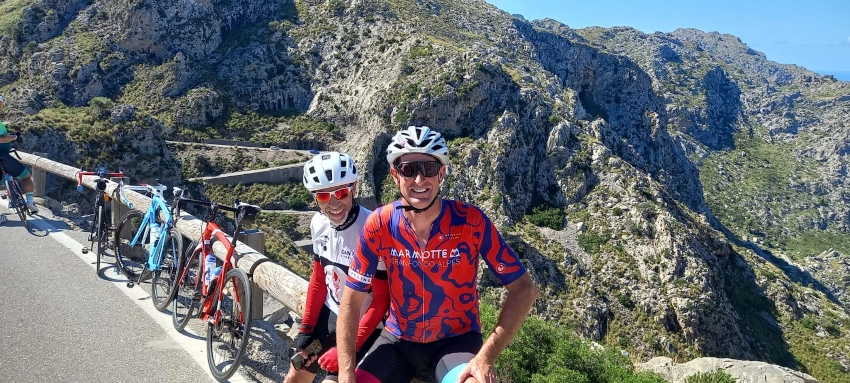 Mallorca is packed with world famous climbs!
The SportActive Luxury Cycling Experience in Mallorca
SportActive has been running Mallorca cycling holidays for over 20 years. Martin, Flora and the team know every corner of this island, and that knowledge translates directly into your holiday : Mallorca cycling routes that avoid the tourist traffic, café stops that wouldn’t make any guidebook, and the confidence that comes from being guided by people who have ridden every Mallorca road hundreds of times.
Groups are capped at 12 riders. You’re based at the five-star Hotel Zafiro PalaceAlcudia. And if you want to ride with Sean Kelly, one of cycling’s true legends, this is where it happens.
There’s a holiday for every level:
- The Mallorca Cycling Holiday suits a wide range of abilities, with daily ride options from easy to advanced.
- Performance Week is built for cyclists who want structured training and real fitness gains.
- The Leisure Cycling Holiday puts the emphasis on enjoyment, scenery, and the pleasure of riding in a stunning place without the pressure to perform.
Why Choose French Alps Cycling?
 The French Alps are on many a cyclist's bucket list
French Alps cycling is a different proposition entirely. Where Mallorca offers variety and consistency, the Alps offer scale and theatre. These are the mountains you’ve watched on television every July, and riding them is exactly as significant as it sounds.
Why Summer in the Alps Is So Compelling
The French Alps are a summer destination for good reason. The high passes only open fully between June and September, and it’s during these months that French Alps cycling reaches its peak. Long evenings, warm days, and mountain villages that come alive with cyclists from across Europe make for an atmosphere unlike anywhere else.
There’s also something about the quality of light in the Alps in midsummer. The way it catches the snow on the highest peaks, the way the valleys fill with colour. It’s the kind of environment that defines cycling for pleasure.
The Pro Cycling Connection
The Tour de France has been traversing these mountains for over a century, and that history is woven into every climb. When you crest the Galibier at 2,646 metres, or reach the summit of the Col de la Bonette at 2,802 metres, the highest paved road in Europe, you’re doing something that Merckx, Hinault, Indurain, Kelly, and Pogacar have all done. The names on the road, the memorials at the summits, the villages that have hosted stage starts are cycling heritage you can physically ride through.
For cyclists who grew up watching the Tour, French Alps cycling isn’t just a holiday. It’s a pilgrimage.
 Bonette features the highest paved through road in Europe
The Cols: What You’ll Ride
La Route des Grandes Alpes. SportActive’s 8-day, 550km guided journey from Geneva to Nice — crosses 12 legendary cols. These include :
- Col du Galibier (2,646 m). One of cycling’s great altars. Long, relentless, unforgettable.
- Col de la Bonette (2,802 m). The highest sealed road in the Alps. The views are genuinely unlike anything else.
- Col d’Izoard (2360 m), Col de Vars (2108 m), Col de Turini (1607 m). Each one steeped in Tour de France folklore.
The Marmotte Granfondo Alps. 174km with 5,000 metres of climbing takes a different approach : four iconic cols in a single day. Col du Glandon, Col du Télégraphe (1,566 m), the Galibier (2,646 m), and the finish at Alpe d’Huez (3,330 m). It’s one of the hardest days in amateur cycling. It’s also one of the most electric.
The SportActive Luxury Experience in the French Alps
SportActive brings the same owner-led approach to the Alps that defines its Mallorca holidays. Martin, Flora and the team guide the route, the groups stay small, and the focus is always on the experience of the individual cyclist. On La Route des Grandes Alpes, you ride mid-June with this year's tour operating between 13th - 20th June 2026. A maximum of 15 riders — small enough that every day feels personal, large enough for real camaraderie on the climbs.
The Marmotte Granfondo traditionally takes place on the last Sunday in June. This year’s event is on the 28th June 2026 and is a fully supported event experience. You ride in a peloton of around 8000 cyclists, but you prepare, travel, and recover with the SportActive team.
Sportive Events in Both Locations
If racing against the clock is part of the appeal, both destinations offer landmark sportive events that attract cyclists from across Europe.
In Mallorca, the Mallorca M312 sportive is Europe’s longest amateur sportive. Features 312 kilometres of cycling. It’s a serious undertaking, and one that SportActive packages with preparation rides and logistical support. The 2026 event takes place on 25th April. There are also shorter route options. Mallorca M225 - 225 km, and Mallorca M167 - 167km for those building up to the full distance.
In the French Alps, the Marmotte Granfondo is the standout. 174km, 5,000m of climbing. It’s been running since 1982 and draws some of the strongest amateur cyclists in the world. If you want a day you’ll describe to people for years, this is it.
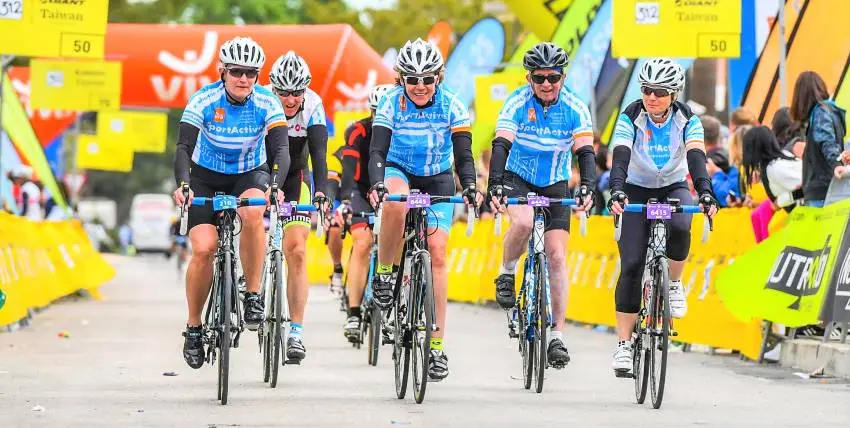 It is a great sense of achievement when you cross the finish line
So Which Should You Ride?
If you want warm weather, variety, accessibility, and the option to ride hard or take it easy, Mallorca cycling holiday is the answer. It works for solo cyclists, couples, groups, and riders of almost any level. It’s flexible, it’s beautiful, and it’s reliably excellent.
If you want scale, altitude, Tour de France history, and the specific satisfaction of conquering Alpine cols, French Alps cycling is what you’re looking for. It’s more demanding, it’s more seasonal, and it’s the kind of trip that genuinely changes how you think about what you’re capable of on a bike.
The honest answer for most cyclists? Both. Mallorca in spring to build the base. The Alps in June for the big test. Mallorca again for late summer as a nice round off before you break out the turbo trainer. They’re not in competition with each other. They're chapters in the same story.
Ready to decide? Whether it’s the sun-soaked roads of a Mallorca cycling holiday or the epic cols of French Alps cycling, we’ll help you find the trip that fits. Get in touch with Martin and Flora
Email:
Call Martin: 0044/ (0)75 997 191 79
We're happy to talk it through. There’s no script, just two cyclists who know these routes inside out.
FAQs
Q : What cycling destinations are seen as the best in the world?
A : Two destinations consistently top the list for serious cyclists: Mallorca and the French Alps. A Mallorca cycling holiday delivers smooth, well-maintained roads with minimal traffic, a reliable climate from February through to November, and terrain that ranges from quiet country roads through olive and orange orchards to the mountain climbs of the Serra de Tramuntana. It's accessible, varied, and genuinely beautiful. French Alps cycling offers something different — high-altitude cols steeped in Tour de France history, dramatic alpine scenery, and the specific satisfaction of riding roads that Merckx, Hinault, and Pogacar have all climbed. Both destinations attract cyclists from across the world, year after year, for good reason.
Q : Is a guided cycling holiday worth it?
A : For most cyclists, yes — significantly so. A well-run guided cycling holiday removes the logistical load entirely: no route-planning, no worrying about mechanicals, no navigating in an unfamiliar country. On a Mallorca cycling holiday or a French Alps cycling trip, that means you arrive, clip in, and ride. The best operators also bring 20+ years of local knowledge — routes that don't appear on any app, café stops that make the day, and the kind of expertise that turns a good trip into a great one. Small groups make a meaningful difference, too. Capped at 12 riders, you're never lost in a peloton of strangers. You ride with people at a similar level, supported by guides who know the roads intimately.
Q : What should I look for in a cycling holiday company?
A : Start with group size. Anything over 15 riders and the personal experience starts to erode — you're on a tour, not a holiday. Look for companies where the owners are still actively involved in leading rides, not just running the business from an office. Experience matters: a company that has been running Mallorca cycling holidays or French Alps cycling trips for 20+ years will know things that a newer operator simply won't. Check the accommodation — luxury cycling and budget hotels don't sit well together after a long day in the saddle. And look for a repeat customer rate. If 70% of guests come back year after year, that tells you more than any review site.
Q : How fit do I need to be to ride Mallorca or the French Alps?
A : For a Mallorca cycling holiday, the honest benchmark is being comfortable spending three to four hours on the bike at your own pace. Many operators use a flexible group ride system that splits cyclists by ability each day, so you're always riding with people at a similar level rather than being dropped or waiting around. For French Alps cycling, you'll want more in the tank. Expect to be in the saddle for five to six hours on bigger days, and some climbs will take an hour or more of sustained effort. A col like the Galibier at 2,646m doesn't negotiate — but if you can ride comfortably for four hours at home, you're closer to ready than you think.
Q : What is the best time of year to go on a cycling holiday?
A : For a Mallorca cycling holiday, spring (March to May) and late summer (September to October) are the sweet spots — mild temperatures, quieter roads, and ideal conditions for putting in real miles without the heat of July and August. It's also worth noting Mallorca works well as a late-season trip before you break out the turbo trainer for winter. For French Alps cycling, the window is tighter. The high cols typically open fully in mid-June, and the best conditions run through to early September. SportActive's La Route des Grandes Alpes from Geneva to Nice runs 13–20 June 2026, which is ideal timing to catch the passes at their best.
Q: What is the toughest cycling challenge in Mallorca or the French Alps?
A: There are three that stand out. The Marmotte Granfondo Alps is widely considered one of the hardest days in amateur cycling — 174km with 5,000 metres of climbing across four legendary cols: the Glandon, Télégraphe, Galibier, and the finish at Alpe d'Huez. It's a defining day on a bike. La Route des Grandes Alpes — SportActive's 8-day, 550km guided journey from Geneva to Nice — is a different kind of challenge: 12 cols including the Galibier and the Bonette (2,802m, the highest paved road in Europe) accumulated over a week of French Alps cycling. In Mallorca, the Mallorca M312 is Europe's longest amateur sportive — 312 kilometres around the island in a single day. A Mallorca cycling holiday built around the Mallorca M312 is a serious undertaking, and one that rewards proper preparation.
Submitted: 11/03/2026


